How Cleerly Detects Early-Stage Heart Disease
- posted: Oct. 28, 2025
At The New York Center for the Prevention of Heart Disease in New York, NY, innovative diagnostic technology is transforming how doctors detect and manage heart disease. One of the most groundbreaking advancements in cardiac care today is Cleerly, a cutting-edge imaging platform that provides a clear, comprehensive picture of coronary health. Unlike traditional methods that only reveal blockages after the patient has developed symptoms of chest pain, Cleerly helps Dr. Radwaner see the entire coronary artery circulation, including all cholesterol deposits from their earliest non-obstructive stages to more severe obstructive plaques. Early cholesterol deposits are not calcified and will not show up on a Coronary Calcium Score test, but are seen on the Cleerly analysis of a Coronary CT Angiogram. The Cleerly artificial intelligence can characterize the type of cholesterol deposit as ones that are high risk, lipid rich; intermediate risk or fibrotic; and low risk, stable calcified cholesterol plaques that are much less likely to pop open within the coronary artery, cause an obstructing clot which leads to a heart attack.
A Clearer View of Coronary Health
Heart disease develops silently over time, often progressing unnoticed until a serious event like a heart attack occurs. Conventional diagnostic tools, such as stress tests or angiograms, primarily detect late-stage disease or significant narrowing in the arteries. The Scot-Heart study in Scotland showed that the use of Coronary CT Angiograms (CCTA) to direct the care that is provided to patients with coronary artery disease, reduced the incidence of heart attacks and hospitalizations by over 40% when compared to care without the knowledge from a CCTA. Some patients had their cholesterol medications increased, some had stents or coronary artery bypass surgery and some had their medication reduced.
From Imaging to Insight
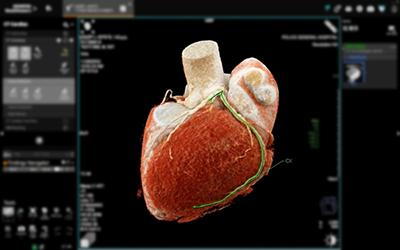
Cleerly transforms a standard coronary CT scan into a detailed 3D map of the heart’s arteries. The digital reconstruction allows Dr. Radwaner to analyze each of the patient's coronary arteries and each of the cholesterol deposits (plaques) distinguishing between soft, calcified, and mixed plaque. These distinctions matter because soft plaque, often invisible on traditional scans, is more likely to rupture and cause a heart attack. By identifying these early changes, Cleerly provides a more accurate risk assessment, giving patients and Dr. Radwaner the opportunity to intervene before the disease progresses.
Personalized Prevention Through Precision
At The New York Center for the Prevention of Heart Disease, the goal is not just to treat heart disease but to prevent it altogether. Cleerly supports this mission by allowing physicians to tailor treatment and lifestyle recommendations based on each patient’s individual risk profile. For example, a patient with early, non-obstructive plaque may benefit from lifestyle modifications and medication to reduce cholesterol and inflammation. Another patient with more advanced findings may require coronary stent placement or coronary bypass surgery in addition to intensive medical management with lipid-lowering medication, anti-inflammatory medications, and optimal treatment of hypertension and diabetes.
Transforming the Future of Cardiac Care
What makes Cleerly truly remarkable is its ability to track heart health over time. By comparing results from one scan to the next, Dr. Radwaner can measure whether plaque buildup is slowing, stabilizing, or reversing in response to therapy. This level of insight helps guide treatment decisions and motivates patients to stay engaged in their care journey.
At The New York Center for the Prevention of Heart Disease in New York, NY, Cleerly represents a powerful step forward in early detection and prevention. If you’re concerned about your heart health or have risk factors such as high blood pressure, diabetes, or a family history of heart disease, call (212) 717-0666 today to schedule your consultation. Protect your heart with the precision and promise of Cleerly, because prevention starts with seeing clearly.
- posted: Oct. 28, 2025
At The New York Center for the Prevention of Heart Disease in New York, NY, innovative diagnostic technology is transforming how doctors detect and manage heart disease. One of the most groundbreaking advancements in cardiac care today is Cleerly, a cutting-edge imaging platform that provides a clear, comprehensive picture of coronary health. Unlike traditional methods that only reveal blockages after the patient has developed symptoms of chest pain, Cleerly helps Dr. Radwaner see the entire coronary artery circulation, including all cholesterol deposits from their earliest non-obstructive stages to more severe obstructive plaques. Early cholesterol deposits are not calcified and will not show up on a Coronary Calcium Score test, but are seen on the Cleerly analysis of a Coronary CT Angiogram. The Cleerly artificial intelligence can characterize the type of cholesterol deposit as ones that are high risk, lipid rich; intermediate risk or fibrotic; and low risk, stable calcified cholesterol plaques that are much less likely to pop open within the coronary artery, cause an obstructing clot which leads to a heart attack.
A Clearer View of Coronary Health
Heart disease develops silently over time, often progressing unnoticed until a serious event like a heart attack occurs. Conventional diagnostic tools, such as stress tests or angiograms, primarily detect late-stage disease or significant narrowing in the arteries. The Scot-Heart study in Scotland showed that the use of Coronary CT Angiograms (CCTA) to direct the care that is provided to patients with coronary artery disease, reduced the incidence of heart attacks and hospitalizations by over 40% when compared to care without the knowledge from a CCTA. Some patients had their cholesterol medications increased, some had stents or coronary artery bypass surgery and some had their medication reduced.
From Imaging to Insight
Cleerly transforms a standard coronary CT scan into a detailed 3D map of the heart’s arteries. The digital reconstruction allows Dr. Radwaner to analyze each of the patient's coronary arteries and each of the cholesterol deposits (plaques) distinguishing between soft, calcified, and mixed plaque. These distinctions matter because soft plaque, often invisible on traditional scans, is more likely to rupture and cause a heart attack. By identifying these early changes, Cleerly provides a more accurate risk assessment, giving patients and Dr. Radwaner the opportunity to intervene before the disease progresses.
Personalized Prevention Through Precision
At The New York Center for the Prevention of Heart Disease, the goal is not just to treat heart disease but to prevent it altogether. Cleerly supports this mission by allowing physicians to tailor treatment and lifestyle recommendations based on each patient’s individual risk profile. For example, a patient with early, non-obstructive plaque may benefit from lifestyle modifications and medication to reduce cholesterol and inflammation. Another patient with more advanced findings may require coronary stent placement or coronary bypass surgery in addition to intensive medical management with lipid-lowering medication, anti-inflammatory medications, and optimal treatment of hypertension and diabetes.
Transforming the Future of Cardiac Care
What makes Cleerly truly remarkable is its ability to track heart health over time. By comparing results from one scan to the next, Dr. Radwaner can measure whether plaque buildup is slowing, stabilizing, or reversing in response to therapy. This level of insight helps guide treatment decisions and motivates patients to stay engaged in their care journey.
At The New York Center for the Prevention of Heart Disease in New York, NY, Cleerly represents a powerful step forward in early detection and prevention. If you’re concerned about your heart health or have risk factors such as high blood pressure, diabetes, or a family history of heart disease, call (212) 717-0666 today to schedule your consultation. Protect your heart with the precision and promise of Cleerly, because prevention starts with seeing clearly.
The NY Center for the Prevention of Heart Disease
136 East 57th Street,
New York, NY 10022
Hours of Operation
Monday
9:00 am - 5:00 pm
Tuesday
9:00 am - 5:00 pm
Wednesday
10:00 am - 7:00 pm
Thursday
9:00 am - 5:00 pm
Friday
9:00 am - 5:00 pm
Saturday
Closed
Sunday
Closed